Blood, Bones, and Dirt: Baba Ed Whitfield on Rebuilding the Commons
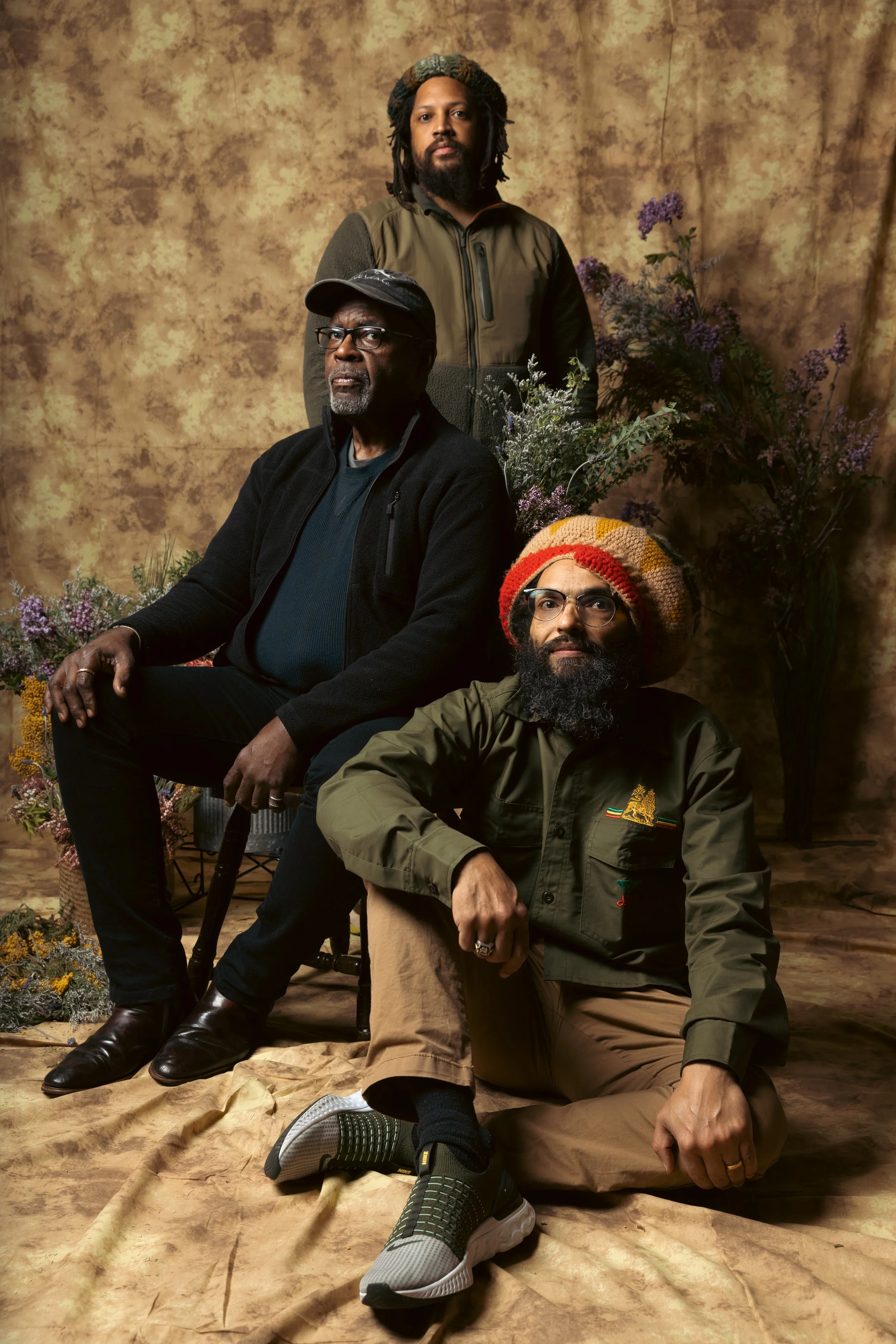
LTR: Eric Jackson, Ed Whitfield (middle), and amaha sellasie pose at Black-Led Day 2024.
Transcript:
Peace everyone. I’m Salifu with the National Black Food and Justice Alliance. Thanks for tuning in.
Today’s conversation is about land, power, and one of the big ideas guiding NBFJA’s work: the Resource Commons.
At the NBFJA, part of our land work is called Black Land and Power. Through that work, we organize with Black farmers, stewards, and land-based organizations across the country to protect Black land, recover land that has been taken, and support food systems rooted in Black self-determination.
The Resource Commons is one strategy inside of that work. At its core, it asks: How can land and resources be protected and used in ways that benefit Black communities?
That means working to take land out of the speculative market. In plain language, we do not want land to be treated as something people simply buy, sell, and flip for profit. We want land to stay with Black communities who are using it to actually feed people and build power.
To guide the development of The Resource Commons, we created a Resource Commons Council. It brings together people from across the Alliance, including farmers, organizers, and cooperative leaders who are actually doing this work. Their job is to help shape the vision, provide guidance and accountability, and support the development of strategies that protect land and resources for the long-term benefit of Black communities.
This conversation grew out of our desire to build a clearer shared understanding of what the Resource Commons is, what it is here to do, and what it might need to become.
To help us think through those questions, I spoke with Baba Ed Whitfield.
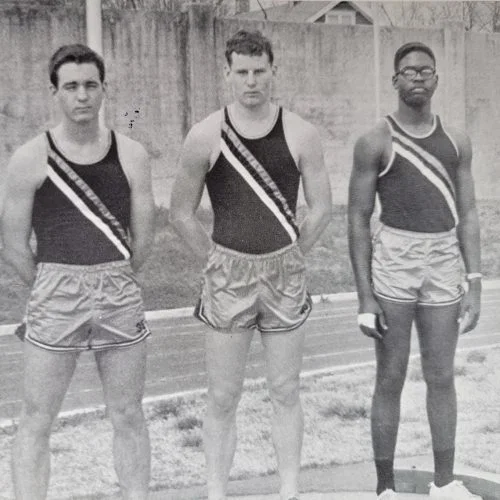
Ed is a longtime Black liberation organizer, educator, cooperator, and member of Resource Commons Council. He was born in Little Rock, Arkansas, and has been involved in social justice, anti-war, and Black liberation work since he was a teenager. His work has moved through racial justice organizing, labor and community organizing, political education, and decades of thinking and building around economic democracy.
Here’s Baba Ed Whitfield on what he calls blood, bones, dirt, and rebuilding the commons.
Ed Whitfield: The commons is that space in the world, physical and in terms of infrastructure that is shared between people in order for the people who utilize it to be in a position, again, to meet their needs and elevate the quality of life. The entire world grew out of the fact that people live on this big wet ball of dirt floating around in space, circling the sun every year, spinning on its axis every day in this much larger Milky Way constellation where we have little contact other than to look out and see the stuff at night.
But where we do have contact here on this earth is a big wet ball of dirt that had available to people before they began to order the cities that they lived in. It had available food that was the common right and access to everyone. So people engaged in hunting and gathering so that they had food to bring back into their families, and feed their families to meet their needs for food.
They found fresh water. They didn't have to buy water. They didn't buy water in little small plastic jars that were full of poisons. In fact, the whole concept of buying water on an earth that is four-fifths water is kind of weird. They didn't buy land at that time because the land was all around them and, and the land had a certain level of abundance.
and when the land needed more abundance than it spontaneously had, people found ways to engage in agriculture to plant the crops that they particularly liked. The stuff that was edible as opposed to the stuff that was poison that they learned probably through trial and error. "Don't eat that 'cause that killed Joe over there."
People had food that was available, had water that was available, all of which grew on land. And out of that, folks started building things. They built communities, they built cities, they built buildings, they built shelter from the rain and storm. They built roads, they built easy ways to get from one place to another, to get from one type of resource that they needed or made use of to something else that they needed and wanted.
They built whole transportation and trading systems so that the people who lived where it was easy to grow coffee could grow the coffee, and the people who lived where it was easy to grow animals and feed could grow that, and they could exchange it with each other so that people, had access and built utilizing what was commonly available to everybody.
All of the resources that we found as opposed to created or made or bought, we made use of these resources again to within our families and households meet our needs in elevating the life-- elevating the quality of life in the communities that we built. So all of the other things we built, the infrastructure, the roads, the communication channels, the markets, the place where we would stand, and trade our chickens for somebody else's goats.
All of these markets were tools that we built in order to facilitate, again, meeting our needs and elevating the quality of life. Because we went from kind of bare needs, which are those things that are absolutely required to keep us alive, which only includes food, and water and air, We went from having that available to us for free on this earth that we found to a system that exists now where virtually everything that people need is owned by somebody, which is to say that somebody's restricting your access to it, and bought and sold as a commodity, as something that, that has some kind of value.
And people act as though they think the things that have the most value are the most useful. But what is more useful than air?
Salifu: Nothing.
Ed Whitfield: Nothing. I mean, you go, without air for a couple of minutes, you die. What is more useful than clean, fresh water? Very few things. And yet the price of gold and diamonds and other stuff greatly exceeds the price of air and water, not because we need it more, but because those things embody a certain amount of human labor that goes into it.
Now, ownership structures grow out of people's, out of some of the tools that people created during a time of what I will call the enclosure of the commons. At that point, things that had been available to all of us to use in order to meet our needs and elevate the quality of life in our community became the private possession and private property of someone.
Well, how did this take place? Okay, so you used to go in this area and hunt for berries, grapes, you love grapes, and let's say chicken. Or maybe you were looking for some soybeans so you could make some tofu. Anyhow, all of the stuff that you needed to get that was there in the commons. It was all there, and it was available to everybody.
You would always bring that home from the commons because you had access to these resources, which again, I wanna reiterate, no one invented, no one put it there through their hard work. The Earth was there. Somebody went from that system of the relationship to the commons to one of the enclosures, which is to say now the king owned it.
And how did the king get to own it? I will assure you that it was a violent process, because there's nobody who used to go gathering all their fruit and stuff who all of a sudden comes to the same place where they used to gather their fruit and are told, "You can't come here." And it's like, "What? Why can't I come there?"
"Well, 'cause it's not yours." "What do you mean it's not mine? I mean, I mean, it never was mine, but I was always able to use it to provide, but..." "No, you can't come in." "Well, whose, is it?" "Well, it belongs to The king or this, rich aristocrat. How'd he get to own it? Well, he got a piece of paper.
A piece of paper? What's paper? It's a... He hold up, he could hold up some piece of paper. What is that? That's a deed. A deed? Indeed. What do you mean it's a deed? Why is it that you think you can own this which was available to all of us and held in common, and that we have access to? It's because we've enclosed the common.
Well, I don't like that. You can't block me from it. Oh, yes, we can. How? You see all these people behind me with guns and spears and knives and rocks and bows and arrows? That's my army, and it is with my army that I will slaughter you if you come on this land without my permission.
And it was through that process that was the enclosure of the commons. It was a violence, violent process of expropriation of people's access to nature itself that has taken place and has become to become so commonplace that people act as though it's the only possible way people could relate to nature.
When in fact, we know that for maybe 150,000 years, people existed with access to the commons, the places that they would go to work and do what they needed to do to meet their needs and elevate the quality of life before it was ever enclosed, and you had these processes of private ownership, which allow for the concentration of wealth and power in such a way that those people who have control over the means of production have control over the very life of everybody else.
They have the capacity to tell other people that you can't hunt here, you can't gather here, you can't fish here, you can't build your house here, and therefore go starve to death out in the woods in the rain. That is the power that is given by the enclosure of the commons, and it was a power that was appropriated through violent means by a handful of people that is increasingly shrinking in the world in terms of its number, but growing in terms of the power that they exercise over everybody else.
That's kind of what the commons is about. Does that make sense?
Salifu: Makes total sense. I really appreciate that breakdown, the way you painted that picture. I also just wanna say to you, you're a great storyteller. I was following that story from beginning to end. And so now I'm left with the question, here we are in 2026, and we're talking about reclaiming or trying to reclaim that commons that's been enclosed upon in that process that you just described. Yes. It's like, what does that mean for us when we're talking about Black people and land and power and this mission, this task of, objective of self-determination? What does that mean for us?
Ed Whitfield: Well, one of the phrases you may hear us using a lot is a question of removing land from the speculative market. What does it mean to us? We're trying to take land off the speculative market, We're trying to de-commodify nature, and we're trying to recreate a commons where people have access to that which they need in order to, again, meet their needs and elevate the quality of life. So in concrete, the Resource Commons Committee is within the National Black Food Justice Alliance, working on creating opportunities for people to have access to land.
Much of that is through land ownership, because again, that's the paradigm that people are connected to and used to. But I would challenge us that this notion of ownership flies in the face of the fact that this entire continent, North America, that we live on now, once was the living ground of the indigenous communities that lived here.
And so this process of taking land out of the speculative market and becoming stewards of that land. If you notice, there's some people who are using the terminology of "land stewardship" rather than "land ownership", and that, I believe, is connected with a reflection on the fact that land ownership is weird.
Like I said, it's like it was here, so I mean, how you get to own it? Land stewardship is a less weird concept because it relates to the fact that there's a certain order that needs to be established on how land is utilized and how it is utilized for the purpose of, again, communities of people meeting their needs and elevating the quality of life.
Among those needs are the need for food, clothing, and shelter that grow out of the kind of modern world that we live in.
Salifu: And so you mentioned that at the NBFJA, something I will hear a lot is this idea of taking land off the speculative market, and you explained just now that process of taking the land off the speculative market is about figuring out, once that land has been taken off the market, how we reimagine, or restore the communal aspect of the commons on that land.
Ed Whitfield: Yeah, to the extent we can. Because right now, even our effort to take it off the speculative market causes us to engage in buying it, which is exactly what the speculative market... Buying it at, often at, what are considered, market prices. So this whole question of taking land off the speculative market is complex.
Some of the forums that people have come up with in order to do it have to do with things called community land trusts, which again is a commonly held block of land in which people are allowed to do-- engage in certain kind of economic activities, again, to meet needs and elevate the quality of life. But the land itself is held in a trust, which is in it- itself, a kind of acquiescence to certain ownership structures that have been created by the very system that many of us oppose. But, you know, ain't no way to do this in a pure way unless we got army enough to take it back away from the military, which would claim to uphold property rights and uphold the right of the people who previously stole the land to keep that which they have stolen.
Salifu: I guess from your evaluation, right? Like this is just your personal evaluation when you look at the work that's being done in this arena. What are some of the things that you look at and you say, "Man, you know what? This is effective. This is absolutely what we should be doing right now"? And then what are some of the things that you hope that at some point we kind of evolve toward?
Ed Whitfield: Okay. One, I think that the land stewardship training that a lot of people hold very dear and advocate for is an important part of the work that needs to happen. Because again, people aren't spontaneously knowing how to steward the land that they could potentially have access to. A part of that work has to do with people realizing the, forms of ownership that exist under the existing system, and even if they understand what's wrong with some of those forms of ownership, know how to make use of them so that, again, they can try to, to the extent that they can, take this land out the speculative market so that all the land doesn't end up being owned by Walmart or some South African investors who moved to the United States, or Chinese oligarchs who are looking to, buy up farm property.
I understand there's a lot less of that going on than some people assume, but there's some of it, and however much of it is probably too much. nor is it just something that is a race thing where if we sponsor and support Black hands holding this land on the speculative property, speculative, market, that's a whole lot better.
Because some of the Black folk who might own it be like them Negroes that sold us into slavery. It's like, "Yeah, you can make a lot of money. You know, yeah, slavery might be bad, but, you know, you can make a lot of money like that." And, they said they were able to bend their morals a little bit around that.
It's like, yeah, we have to find ways to make use of the existing structures in order to take stuff off the speculative market. So the people who are helping to engage in that dialogue, I think are doing, you know, very, good work. The other thing I think is really important is any work that is done toward helping to create the infrastructure that would be useful to make land productive.
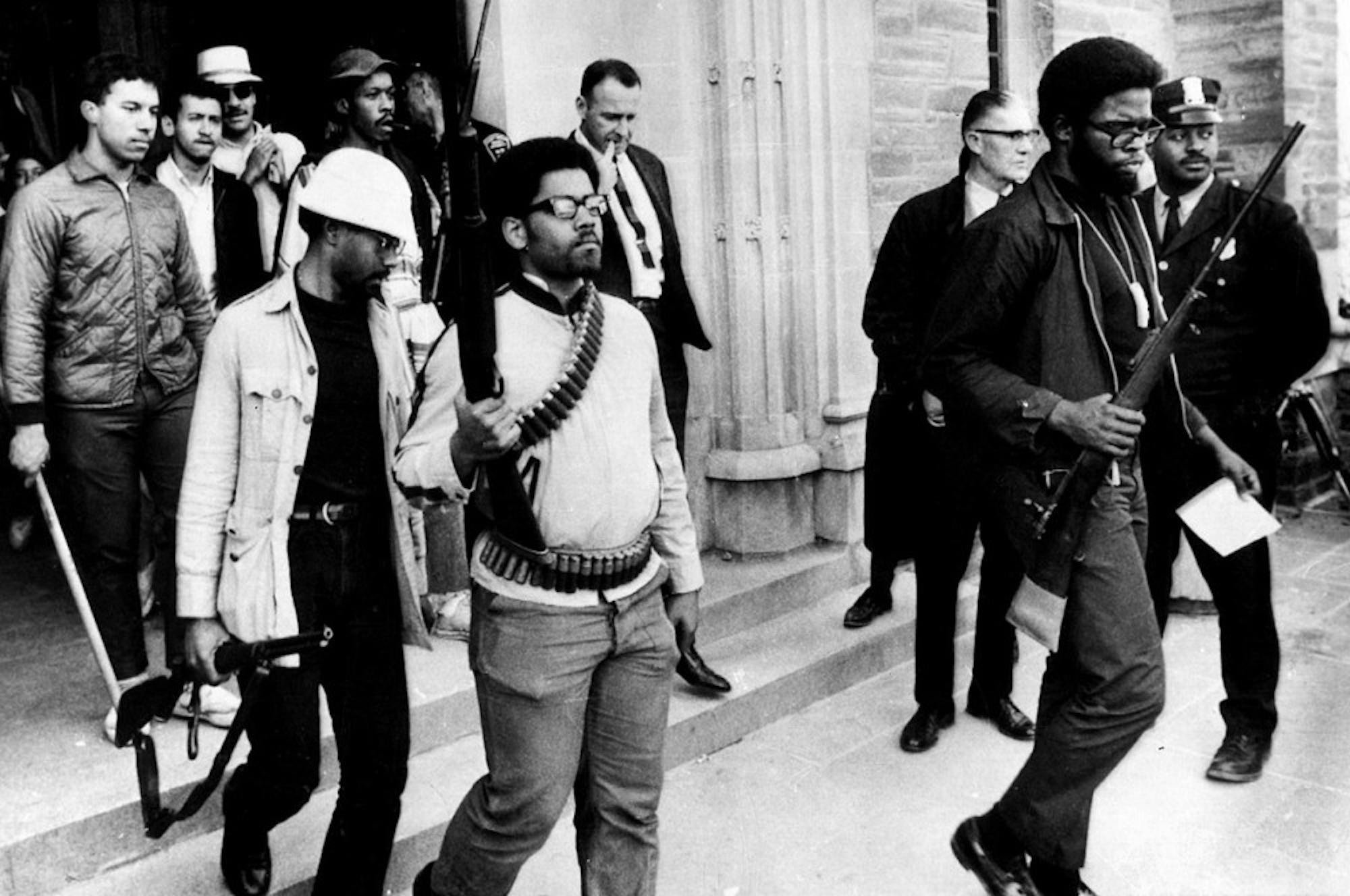
Ed Whitfield ’70, a leader in the 1969 Willard Straight Hall Takeover at Cornell University
You know, there were people in the late 1960s, shortly after the Civil Rights Movement had reached its peak, they had observed this phenomena where a lot of Black folk were beginning to lose land or heirs property stuff that ended up causing folks to, have land split up then auctioned off in ways that they couldn't buy it.
And one of the things they identified during that time, there were some really excellent papers written on it, were that, unless you found a productive use for the land, then access to land created a land burden where you had to pay tax on something that wasn't generating any income to you, and ultimately it would drain itself of its own value.
So that people who are struggling to develop tool banks, tool libraries, access to tools, land trusts, access to land that people can come and work, but they don't have the right to own and sell to speculators. All of these are parts of the work that I think are useful to do as we try to move toward constructing, you know, a world where the commons is a more common idea than it currently is.
Salifu: Where do we need to be stretched? Where do we need to be pulled? What are some of the challenges or maybe some areas of stagnancy that you may have observed?
Ed Whitfield: I mean, any time and place where people assume that any of the things I just described are easy are growth areas.
Deepening our involvement in entrenchment in the existing economy is one of the things I think needs to be challenged. and so that we are left to figure out how to locally tie ourselves into, you know, locally existing food structures. For instance, how to get to where your farm supplies the beans for the public education system in your area.
So the relocalization of agriculture is something that I think, you know, is an area that we need to figure out both the policy and practical ways to engage in, in a, in a, fuller kinda way.
Salifu: In a future where the commons has been reclaimed to the extent, you know, as we understand it, it could be the highest extent that it could be in this, sort of like liberated, in this kind of liberated territory, what does, what does life look like for me?
Ed Whitfield: You would get up in the morning singing a song about freedom. And it would be a song that recognizes what the 20 Negro ministers in, in, Savannah, Georgia said, which was that, you know, "when one person can take the value of the labor of somebody else, then that person whose value is being appropriated is a slave to those who are in a position to take it." And you would use that as a means of, as a song about being determined not to recreate that system.
It's a real challenge kind of thinking about the future because there's so many things that might exist in a future world that don't even have any counterpart yet. Whoever knew that some people could become entertained by watching videos on a small handheld device?
So, I, I mean, it's about us envisioning a world where we think about, you know, what do we need?
What we need is food, clothing, shelter, and to make meaning. And by making meaning, I mean, you know, singing songs that are connected with our mating rituals, whether we are drawn to people of the same sex or the opposite sex. There's something about singing a song to whoever you're drawn to that is kind of fun and, and playing the instruments to make the music, as opposed to getting ChatGPT to write you a song.
I mean, it's like we are so able to dehumanize people by coming up with these processes that we think are lucrative and temporarily beneficial in the short term, but have the long-term effect of devastating communities and taking us away from our humanity. In what does our humanity lie? It lies in our ability to be creative and productive and to be able to take pride in our ability to not only feed ourselves and our children and the children who come after our children, but make the community continually better and better, you know, as time goes by.
And so our culture should celebrate that. Our education should prepare us for that. and the structures of our community should facilitate that. That's all I know to say. And beyond that, it'll look like whatever it looks like.
Thank you for listening.
Thank you to Baba Ed Whitfield for grounding us in the deeper meaning of the commons, and what it asks of us as we think about land, stewardship, infrastructure, and collective power.
You can find this conversation and the full transcript on the NBFJA’s blog. And if you’re looking for more of this kind of thing, you’d probably enjoy Field Notes on Substack. Search us up at fieldnoteslff.
Catch you next time!